Havana, And My Mojitos Sucked!

I love a good cocktail, especially one with a rum base.

So when I knew I was going to Havana, I was as excited about going as I was about all the rummy cocktails I knew I’d get to drink.

Cuba is, after all, rum country. It’s also home of the mojito, the daiquiri and the Cuba Libre – all made with rum and lime juice, my other favorite ingredient.

But it was the mojito, the perfect refreshing antidote to hot days, that looked forward to downing.

Unfortunately, my first Havana mojito sucked!

And it wasn’t just that it needed more sugar. We tried that and it still tasted ‘off.’

So did the next one at the second bar.

The mojitos I’ve had in New York and elsewhere – the taste I’ve come to love – are a delicate balance between rum, sugar, mint, lime juice and ice. Even allowing for slight variations in the taste of the ingredients and the quantity of each that was used, I couldn’t explain the big difference in taste between Havana’s mojitos and New York’s.

I was disappointed.

I just knew the mojitos in Havana would have been good, so good, I’d be drinking them instead of water. And I knew I’d be raving about them when I returned home. I just knew!

Instead, I found myself doing what I do when I’m out and can’t find my favorite brand of spirits, I revert to something that’s foolproof: in this case, rum and coke.

(Yes, even though Cuba has its own brand of cola, this American import is available, especially in tourist areas.)

Now, there’s really nothing wrong with my backup drink: rum and Coke or the rum, Coke and lime mix called Cuba Libre. But since my taste buds had been primed for weeks in anticipation of the mojito, it felt like a poor substitute.

Several days later, while we were having lunch in a hotel restaurant, I noticed something that to me explained why the mojitos tasted so different.

There, on the bar, were rows of glasses. Each had sugar, lime wedges and several sprigs of mint leaves. How long had they been sitting there, waiting?

Could this slow marinating of these two ingredients account for the difference in taste?

Even from where I sat, I could see that the mint leaves had wilted to a deep green and a brownish yellow was slowly overtaking the vibrant green of the wedges of lime.

I watched as a waiter walked over, picked up a glass, added rum and ice, muddled the ingredients and served it to a diner.

I’m not a purist. Neither am I one of those people who thinks food has to taste the same everywhere, you know, like McDonald’s?

Glasses with Mint

But you cannot convince me that that wasn’t the reason for the difference.

Tell me if you agree.

Why Cuba?

A few people have asked me why I went to Cuba. In case you’re one of them, here’s why.

To me, Cuba is like the neighbor behind a wall that you hear but you can’t see.

In Western Jamaica, where I grew up, from very early on, I could hear Cuba from my house through the sometimes faint, sometimes clear sounds of music and voices in a language I didn’t then understand. Over the years, I created my own narrative of the place adults talked about in sometimes panicked, sometimes hushed tones.

I wondered about the people, who it was explained to me, could not leave. I tried to imagine what it would be like not being able to leave or do whatever pleased me.


The image I had, even at that age, was of being trapped, being imprisoned. No, no one wanted that.

Cuba was the Caribbean’s bogeyman – there was always the fear that what happened there could also happen in Jamaica. And many Jamaicans were, understandably, concerned.

Then as I grew older, stories began to come out. Stories told by my mother of two aunts – sisters of her father’s, my grandfather – who went to Cuba, married and never returned.

l also found out that another grand-aunt, this time on my father’s side never returned either.

Between 1916 and 1940, it is estimated that approximately 300,000 Jamaicans went to Cuba in search of work. No one knows how many returned despite being allowed to following the revolution.

My paternal grandfather did. As did my godfather and a family friend – all spicing their Jamaican English with Spanish words and speaking Spanish among themselves – clear signs to everyone else that they had been “a foreign.”

Some of those words became so commonplace, they became part of the lexicon. I didn’t realize until I started learning Spanish in high school that these words were.

My fascination with Cuba never waned – blame that privacy fence, the closedoffness of it. And with family connections, it isn’t a place I could put out of my mind easily, despite all that I learned from my Cuban friends.

When I decided to visit, I told each of them in turn. Not one objected.

My family wanted me to look up the ones who never returned.

But, in the end, I went for me.

Fifty years of repression have not dampened the spirit of the Cuban people. The country hasn’t lost its grandeur, its style or its flare. And I’d go back tomorrow. Because now I have my own images to match the narrative of my childhood.

Posted with WordPress for BlackBerry.

Ready to Travel to Cuba? Know Before You Go

If you’ve been reading my posts about Cuba and would like to travel to that country, there are a few

Monument to Jose Marti

things to keep in mind.

Despite the Obama Administration’s recent announcement of further relaxation of the ban on U.S. citizens spending money in Cuba and expanding the number of airports that offer direct flights there, Americans still need special permission from the Office of Foreign Asset Control to enter Cuba.

But if you can’t wait, here’s what you need to know before you go.

Getting There: Fly to another country (Canada, Mexico, Bahamas, Jamaica, etc.) and get a flight to Cuba. I flew first to Jamaica, purchased my ticket (I had made a reservation beforehand but I don’t think the price would have been different) and left for Havana the next day.

Visas: You’ll need a visa to enter Cuba. Not to worry, it can be purchased from the airline or on arrival. It costs about $30. Your passport will not be stamped.

El Capitolio

Accommodation: There are several companies online that will book your accommodation, whether you’re looking for a hotel or a casa particular (B&B). I used Cuba Accommodation.

While you’re there: Since U.S. issued credit cards are not accepted for use in Cuba, cash is your best option. Unfortunately, U.S. dollars carry a 10% service charge when you change them for Cuban Convertible Dollars (CUCs) so that $100 will be only worth $90. I brought mostly Canadian dollars but I could have brought UK pound or Euros. I did have some U.S. as backup, which I changed eventually. You can change funds at the airport, banks and Cadecas (exchange bureaus).

We used CUCs for most of the things we bought – from souvenirs to food. But if you plan to take the bus, for example, you’ll need pesos, the currency Cubans use.

If, at the end of your trip, you have CUCs remaining, you can change them back.

Departure tax: Speaking of leaving, you will be required to pay US$25 departure tax. No exceptions.

Transportation: Cuba has a good system of transportation including road, rail, air, buses and taxis making it pretty easy to get around.

Cuban Food: I wasn’t very impressed with the food we got at some of the restaurants but what we had at paladars, those small, family-run eateries, was exceptional.

Cuban Art: If you buy art while on your trip, you’ll need to get a license from the Registro Nactional de Bienes Culturales to take it out of the country. The license costs 10 CUCs for 1-5 pieces from the same artist. If you don’t get the license from the Registro, you can get it from a Registro Specialist at the airport but it will cost you more – 7 CUCs per. Without a license, you will not be allowed to leave with your purchases.

Cell phones: Your U.S. cell phones won’t work in Cuba and calling out can be pretty expensive, about $3/minute. If you really need to call home, head for a major hotel.

Email: If you need to send emails, go to a major hotel and, for a fee, you can send emails or surf the Internet. You’ll need to bring your passport for identification.

Cigars and Rum: Don’t forget Cuban cigars and rum are not allowed into the U.S., so enjoy them while you’re there. Also, make sure if you purchased anything that’s stamped or tagged Made in Cuba (Hecho en Cuba) that, if possible, you remove the tag. That would be a dead giveaway to U.S. Customs.

Bear in mind, Cuba is a Communist country and almost all activity by its citizens and visitors is monitored.

When we arrived at the airport, we had to let the immigration know exactly where we would be staying and a few days later, someone did come to the casa particular to check that we were there. Cubans aren’t allowed to have American visitors in their homes.

Neighborhood watch groups (Committee for the Defense of the Revolution) which were set up to keep watch and report on any internal and external threats to the revolution, still patrol neighborhoods to sniff out illegal activities – whether criminal or political.

Monument to Jose Miguel Gomez, Cuba's second president

Used to being connected 24/7 in the States, my first day was an adjustment but it was great to disconnect and focus on being on vacation and enjoying all that Cuba has to offer. And there’s a lot. We spent a week in Havana only and there was still a lot we hadn’t seen.

If you remember these things, you’ll have few surprises when you get to Cuba.

Like this post? Subscribe to read more, comment and share.

Havana: Saying it with Pictures

As we meandered around Havana, these are a few of the things we saw.

Sidewalk homage to Ernesto "Che" Guevara
Another sidewalk homage Che
Monument to Che at the Plaza de la Revolucion

A few mornings we walked the Malecon, from Vedado, where we were staying. to Old Havana. We’d always see people sweeping the streets and cleaning up in front of their buildings.

We were impressed by many of the metal gates, fences and window grills we saw.

Impressive gates
Another impressive gate
Medallion from the gate
Gates at the Union of Writers and Artists Building
Sculpture garden at the Union of Writers and Artists building
Sculpture

One of the things that struck us right away was the absence of graffiti and advertising. We did see one or two political signs and lots of signs reminding Cubans not to litter, etc.

I live in a free country

Like this post? Subscribe, leave a comment and share.

Busted – in Havana!

More than anything else, meeting local people who are warm and friendly is what I remember most when I travel. To increase my chances of interacting with locals, I prefer to stay in smaller hotels, guesthouses, Bed & Breakfasts, and when possible, with families.

So when my friend, Lett and I decided to visit Havana, there was no question where we’d stay – we chose a B&B or casa particular.

The casa particular we ended up staying at was not the one we booked initially but we wouldn’t have met the wonderful family who embraced us and with whom we now stay in touch.

And if we didn’t walk almost everywhere, we wouldn’t meet the Cubans we encountered while out and about. Some left quite an impression.

People like Reina.

Reina greeted me as if I were a long lost friend. And from what she said, I realized she thought I was someone she had worked with years before. I started to tell her she was mistaken but she kept on talking. She realized her mistake only when I switched to English and told her I was Jamaican.

Jamaica!, she repeated and without missing a beat, invited Lett and me to a reception that was being given in honor of the visiting Barbadian Prime Minister at the Caribbean Center that evening. Unfortunately, I wasn’t able to attend. But I’ve not forgotten her generosity.

Alex and Lett

Alex is a member of one of the bands that plays at the Hotel Inglaterra where we spent a few afternoons listening to music and drinking Cuba Libres. We chatted with the musicians after one of their sets and Alex offered to show us around. It was our last day in Havana and a slight drizzle fell quietly on the morning. But Alex arrived exactly at the time he promised he would. We took the bus to Old Havana (Habana Vieja) and he showed us several places we had missed, then accompanied us back to the casa particular.

Minia

Then there was Minia.

Lett and I had gone to the Hotel Nacional to use one of their computers. As we were leaving, an employee approached and asked, in halting English, if we were Jamaicans. A smile of relief spread across her face when I responded that I was. So were both her grandparents, she gushed.

I should not have been surprised to meet someone of Jamaican heritage but I was. Long before migration north became the dream of most Jamaicans and other Caribbean people, Cuba was the place to go. It is estimated that between 1916 and 1940, nearly 300,000 Jamaicans migrated there in search of work in the sugar industry. Relatives of mine on both sides, including my paternal grandfather, went as well. However, only my grandfather returned.

Before I left for Cuba, one of my father’s sisters urged me to try to find an aunt who had never returned. But with only an old address and just a week in Havana, I knew the odds of finding her were slim – I didn’t even try.

I didn’t count on finding Minia or on being busted as a Jamaican — not that I was hiding. I have a pretty normal face, with African features, that equal numbers of Ghanian and Nigerian friends have claimed could be from their respective ethnic groups. But I wonder if there were some characteristics typical of Jamaicans that telegraphed to Minia our real identity.

I have to admit, she could well be a distant relative – her grandparents are from the same area in Jamaica as my maternal grandparents – I’ve yet to trace our genealogy. But for someone whom I met only briefly, I feel an inexplicably strong connection. So I’m glad that she busted me in Havana.

Havana: Africa Meets Cuba in Regla

Following our visit to Callejon de Hamel, we went to the Centro de los Orishas in Regla, a municipality located about a half an hour’s drive from Havana.

The Centro is an open air exhibition space where performances are held. There is a small restaurant as well as a little shop at the back.

The main attraction for us was the sculptural representations to the Santeria gods Eleggua (also Eshu), Obbatala, Yemaya (Yemonja, Iemonja), Chango (also Shango and Sango), Ochun (Oggun), Babalu Aye and Ochosi.

Santeria is derived from the Yoruba religion of West Africa. Followers believe in Olodumare (God) and his manifestations (Orishas) that help them in their daily lives, if they follow the appropriate rituals.

Shango and Ochun (or Oggun)

Shango represents virility, strength and sexuality. His color is red and white.

Ochun (or Oggun) is the god of iron and mineral and anything made of iron or steel.

Yemaya

Yemaya is the queen of the seas. Her colors are blue and white.

Obbatala

Obbatala is the god of peace, the creator of the world and the father of the Orishas. His color is white. As I write this, I’m listening to Bobi Cespedes‘ Rezos. Listen to her tribute to Obatala.

Babalu Aye

Babalu Aye can tell the future. His color is purple.

Eleggua

Eleggua (Eshu) is guardian of crossroads and roads and the protector of travelers. His color are red.

Santeria deities Babalu Aye, Obbatala, Yemaya and Ochun

Listen to one more from Bobi [Ogun].

Like this post? Subscribe to read more, comment and share.

Havana: Africa Meets Cuba in Callejon de Hamel

When Africans were brought as slaves to the New World, one of the traditions they brought was their religion.

In Cuba, this religious tradition is known as Santeria and it exists side by side with Catholicism. Each Sunday afternoon, Callejon de Hamel, a block-long shrine to Santeria located between Aramburu and Hospital Streets in Havana comes alive with rumba music and dancing.

Callejon de Hamel Mural

Artist, Salvador Gonzalez, whose studio is located in the middle of the Callejon has been creating these artworks, sculptures and murals since the 1990s. Now the entire block is awash in vibrant colors.

Statue from Callejon de Hamel

Callejon de Hamel underscores the significance of Santeria to Cubans.

Statue in Callejon de Hamel
Mural in Callejon de Hamel
Another statue
Callejon doll

This doll was embedded in the ground near the entrance to Callejon de Hamel.

with artist Salvador Gonzalez

A friend who had met Salvador in Havana more than 10 years ago, gushed that I had to meet him. She didn’t know if he’s still be there 10 years later and I didn’t know that Callejon de Hamel was where his studio is located or that he was the artist behind the sculptures I was looking at. But something about the work made me think of him, so I asked and was shown his studio. He wasn’t there. But my friend, Lett and I, hung around admiring his paintings. Luckily, just as we were getting ready to leave, he showed up and graciously agreed to take this photo. Of course, I had to tell him about my friend who had spoken so glowingly about him.

Like this post? Subscribe to read more, comment and share.

Exit Zero Escape: Cape May NJ

Living in New York City, summer means looking for places to recharge. One place I’ve come to love is Cape May, New Jersey.

Cape May is a picturesque seaside resort town on the southern tip – the last exit on the Garden State Parkway – of New Jersey that comes alive in the summer, swelling ten fold to about 40,000 residents.

Friends talked glowingly of the Victorian houses, the beach, the restaurants. They kept saying it was a place I’d like. It took me a while but when I finally visited, I fell in love.

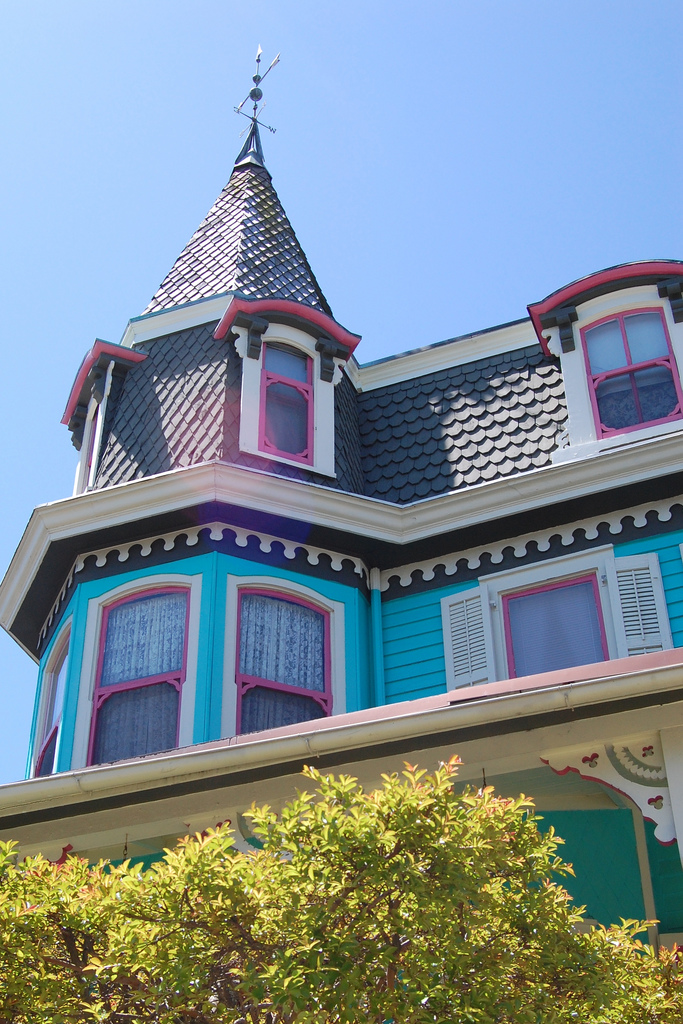
156. Get the point. Roof View Cape May
Beautiful Victorian

With stunning Victorian homes, some converted to Bed and Breakfasts, and vistas such as this, it isn’t difficult to see why this little New Jersey destination is such a draw.

Sunset, Cape May
A gentle sunset
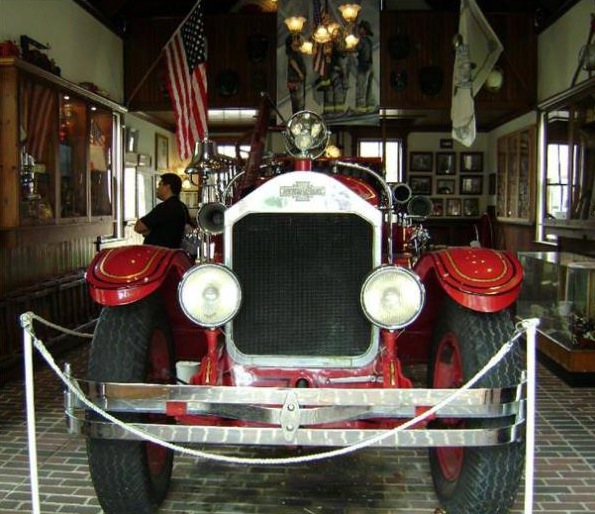
Antique fire truck at Cape May Fire station
Antique fire truck

Our visit coincided with the weekend of the Classic Car show.

1950s Ford, Cape May
1950s Ford at the Classic Car show
Cape May Classic Car Show
Classic Car Show – They sure don’t make them like this anymore

Like this post? Subscribe, comment and share.

Traveling Sick: What would you do?

I felt a chill shortly following our presentation of the gifts and supplies we had brought

Taking off

from the U.S. for students at St. Peter Claver Primary School in Soweto. Then a general feeling of weakness throughout my body that forced me to grab the nearest seat. I felt drained.

I took an aspirin that I got from Sandra, one of my traveling partners, and waited for it to take effect. All I wanted to do was go back to bed, pull the sheet over my head and sleep. But our flight back to the States was leaving in less than 7 hours.

Up until lunch time, I still had no idea what was wrong – just that I felt lousy. And a few hours later when we were having lunch with the teachers, Judith our other traveling buddy, started to feel sick as well.

When the coughing started, I knew for sure – it was the dreaded cold – the last thing I wanted to have on any flight, let along one that lasted 17 hours.

A cold in an enclosed space is bad for everyone so after checking in, we stopped at a pharmacy at the O.R. Tambo International Airport and bought cough drops and other cold remedies. Once on the plane, we got blankets and pillows so we could sleep.

Despite taking the cold medication and continuing to pop cough drops throughout the flight, we coughed sporadically. We felt badly about being sick and I hope we didn’t infect anyone else.

Two things come to mind on looking back: if there is a optimal time to get a cold while traveling, it would be on the day of. A day or so later, when a full blown cold developed, would probably have forced us to postpone our flight. It is never advised to travel with a severe cold as changes in cabin pressure on takeoff and landing can cause serious hearing problems.

Since our bodies were dealing with the onset of a cold, it was easy to sleep. We did for most of the 17 hours and it made the time pass quickly.

If you feel a cold coming on or get one before you fly, take the same precautions you would if you were at home. This is what I usually have on hand: Vitamins C, D and zinc – great immune system boosters and cold fighters; my personal favorites – Alpha CF and Kold Kare, taken at the start of a cold to reduce its severity and duration. If I’ve waited too long, I take over the counter remedies such as Sudafed, Afrin, etc., which help to relieve the symptoms.

So, do you think we should have flown with the early signs of a cold?

Here’s How to Travel with Friends and Keep Your Friendships Intact

One of my guy friends once told me that he never goes on vacation with any of the women

Judith, Sandra and Marcia in Lesotho

he dates because he knows traveling together would ruin his relationship.

After traveling with my relatives on many occasions, I was close to adopting my friend’s attitude, just to preserve the ties of family.

But my trips with friends had gone well enough.

So when my friend, Sandra, announced that she wanted to spend her milestone birthday traveling for two weeks in Southern Africa, I knew I couldn’t let my best friend travel alone. Sandra and I had traveled together many times before and had fun so I wasn’t too concerned. Judith, our newish friend and I share the same astrological sign, so I knew there’d be a good chance we’d have similar temperament.

All three of us had been out on many occasions – to concerts and dinners – but what would 2 weeks of being in such close proximity to each other do to our friendships?

So, here’s what we ended up doing that, I think, not only helped us to have a very memorable vacation and kept our friendships intact.

  1. Have an organizer: Someone must take the lead in planning the trip or you won’t get off the ground.
  2. Know each person’s interests/objectives: Sandra suggested early on that all three of us name the top 3 things we wanted to see or do while.  Getting each person to identify their ‘must-sees’ ensured that each person’s interests were addressed. It also meant that each person gets to experience at least one thing she wouldn’t necessarily have chosen herself, like the safari, for example.
  3. Pitch in: If possible, assign each person the responsibility for planning a part of the trip. In our case, we had 3 different cities, Durban, Cape Town and Johannesburg. Each person selected the city they wanted to plan. Another good way to get everyone invested in the trip and also allows each person to become the resident ‘expert’ on a particular place.

What are your tips for maintaining friendships while exploring the world?

Like this post? Leave a comment and share with someone who would.