Pastor Brown’s Eye Catching House

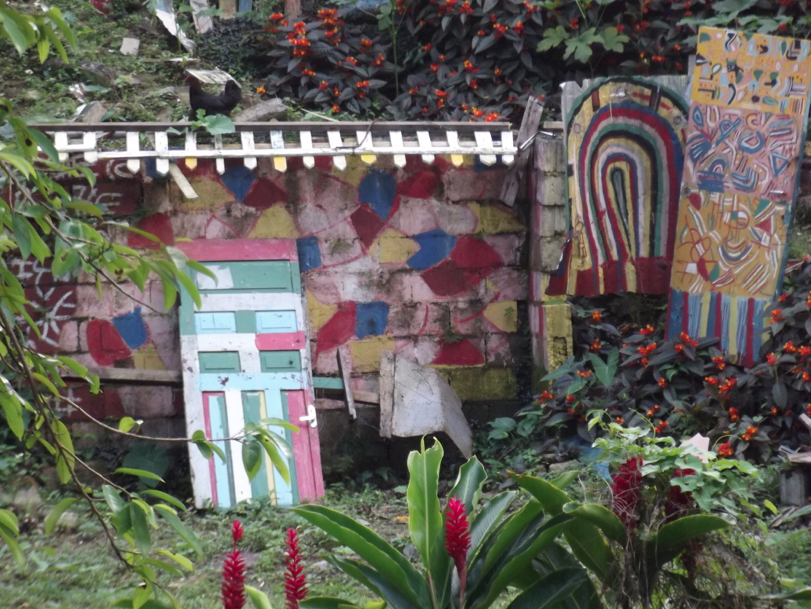
The first time I saw Pastor Brown’s house, I had my friend stop so I could take a photo. It still is the most colorful and eye-catching house I’ve ever seen. My impression then was that an artist or someone equally comfortable with color lived there. Or someone who was absolutely not wedded to the conventions of design, or an eccentric.

Pastor Brown's descending the steps to his house
An Eye Catching House

My first photo was a quick shot, taken as the car rolled to a halt, the engine still running. My friend and I took off as soon as we noticed an elderly gentleman coming down the steps, his hand pointing in our direction. I was sure he would admonish me for taking a photo without his permission, or tell me I needed to pay a fee. And I felt guilty as we sped away. I felt I had invaded his privacy, something I’m very scrupulous about.

A year later, I was once again in Portland. This time, I was with a couple of my friends who I told about the house. I doubt they could imagine what I was trying to describe. It became one of those you’ve-got-to-see-this situations. When we got to the house, we knew we had to stop, and this time I was able to take it all in.

There was color everywhere, every inch of the house, every surface was decorated. There were also signs.

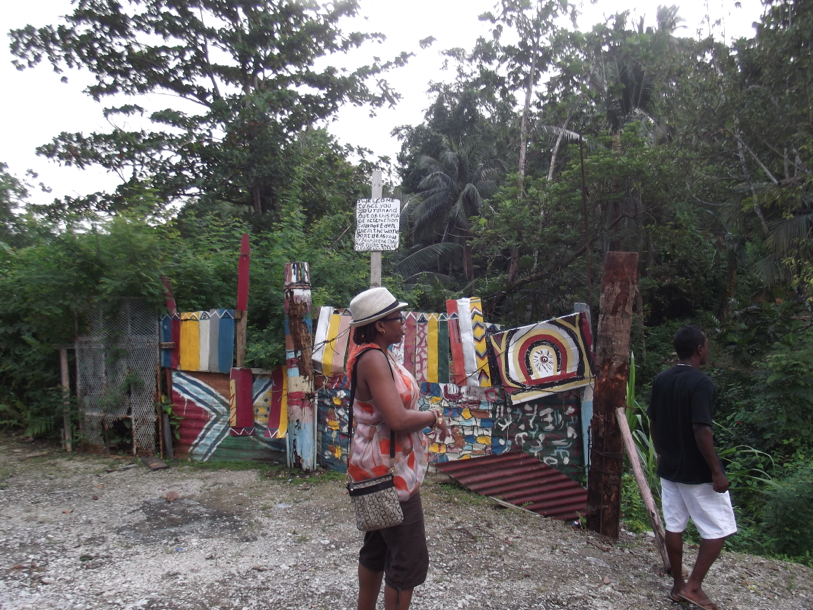
Pastor Brown's wall
Wall at the Brown house
Pastor Brown's gate
Gate to the house
Pastor Brown's sign
Sign and photos of Pastor Brown’s visit to Buckingham Palace
Pastor Brown's colors
Color everywhere

As we approached the gate to the property, a man waved and called out to us. “Come, come in!” he said, as if welcoming long lost friends.

The house is set back a good distance from the road. We walked down a grade, crossed a stream then walked up another grade to the house, which is set on the side of a hill.
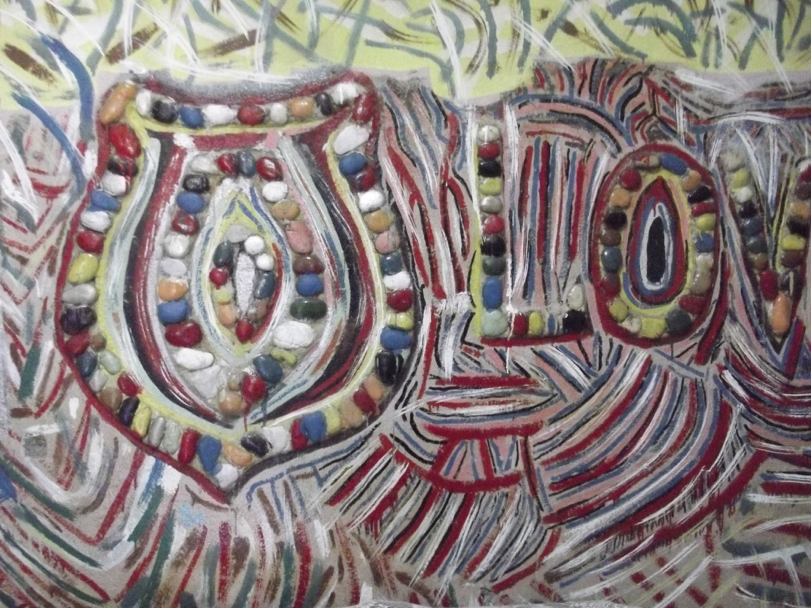
Wall detail at Pastor Brown's
Wall Detail
Pastor Brown and Mrs Brown
Pastor & Mrs Brown

As we got to the steps, the man introduced himself as Pastor Brown. He called out and his wife appeared from behind a brightly painted door and joined us on the verandah.  Pastor Brown proudly showed us around his house. He was clearly proud of the work he had done over the years. He was even prouder to show us photos of his travels. Among them, his pride and joy, a faded photo of him standing outside Buckingham Palace. The way he tells it, it sounds like he actually met the Queen Elizabeth.

Pastor Brown's house
The house

For the record, Pastor Brown is a real preacher. He and his wife were so hospitable I even promised to visit the next time I’m in the area.

This post is part of Travel Photo Thursday, which Nancie at Budget Travelers Sandbox organizes. Be sure to head over and check out more photos from locations around the world.

5 Reasons to Leave the Beach and Explore St. James Jamaica

Most visitors to Jamaica arrive in Montego Bay, but I doubt many know that it’s the capital of St. James, the island’s fourth largest parish. Located on Jamaica’s northwest coast, St. James shares borders with the parishes of Trelawny (east), St. Elizabeth (south), Westmoreland (southwest), and Hanover (west). It got its name, in 1655, from James II, who was formerly the Duke of York.

Like the rest of Jamaica, the original residents of St. James were Taino Indians. Sadly, they didn’t survive Christopher Columbus’ landing on the island in 1494. Some succumbed to European diseases, others committed suicide instead of accepting subjugation to Spanish authority, while some died fighting against the Spanish. Remnants of their presence have been discovered in settlements along the coast of the parish.

Mobay Beach, St. James
Mobay Beach

Montego Bay is derived from Bahia de Manteca (Lard Bay), the name the Spanish called it because of the large population of wild hogs that they found there and which slaughtered for lard that was exported to Spain.

During sugar’s heyday, several plantations dotted the parish making sugar and rum the main exports.  Many of these plantations and great houses were burnt to the ground in the 1831 Christmas Rebellion, one of the largest slave uprisings in the island’s history. The revolt was lead by Sam Sharpe, who was born on Croydon Plantation. Sharpe was hanged and now one of Jamaica’s National Heroes.

Monument to Sam Sharpe at Croydon Plantation, St. James
Monument to Sam Sharpe at Croydon Plantation

St. James has developed much in the last several years, due in part to its location and its legendary white sand beaches, which began attracting visitors to Montego Bay and the north coast since the 1940s. Commonly referred to as the Second City, and the tourist capital of the island, Montego Bay welcomes nearly half of the approximately 3 million visitors the island sees each year, making tourism the parish’s main industry and largest employer.

Most visitors who travel to Montego Bay never leave their all-inclusive hotels. If you’re one of them, here are five reasons to get out and discover the diversity of activities that St. James has to offer.

Ahhh...Ras Natango Garden & Gallery, St. James
Ahhh…Ras Natango Garden & Gallery

Ahhh….Ras Natango Gallery & Gardens – A rock garden, art gallery and the best ecotourism spot in St. James. Ahhh…Ras Natango is located about 20 minutes from Mobay, in the small community of Camrose. Entrance $30, includes shuttle pickup. Lunch is available on order for an additional fee.

Greenwood Great House Pub, St. James
Converted Pub, Greenwood

Greenwood Great HouseNear the border of Trelawny in a community named Greenwood is Greenwood Great House, which was once owned by the family of the English poet, Elizabeth Barrett-Browning. Greenwood has the Caribbean’s finest collection of musical instruments, antique furniture, china and rare books, which all belonged to the Barrett family. Guided tours are available 7 days a week from 9 a.m. to 6 p.m. US$20. 876-953-1077

Rocklands Bird Sanctuary – With more than two-dozen endemic birds, Jamaica is a bird lover’s paradise. If you love birds and are in the Montego Bay area, head over to Rocklands Bird Sanctuary where you can spot up to 17 species, including the humming bird, Jamaica’s national bird, and feed them too!

Rows of pineapples at Croydon Plantation, St. James
Fields of pineapple

Croydon Plantation – Croydon Plantation owes its reputation to pineapples and coffee, as well as its connection to national hero, Samuel Sharpe. Sharpe was born a slave at Croydon. He became a Baptist preacher who organized a peaceful protest in December 1831 that turned into the largest rebellion on the island. Plantation tours with pineapple tastings are conducted on Tuesdays, Thursdays and Fridays. Cost $70 includes round trip transportation and lunch.

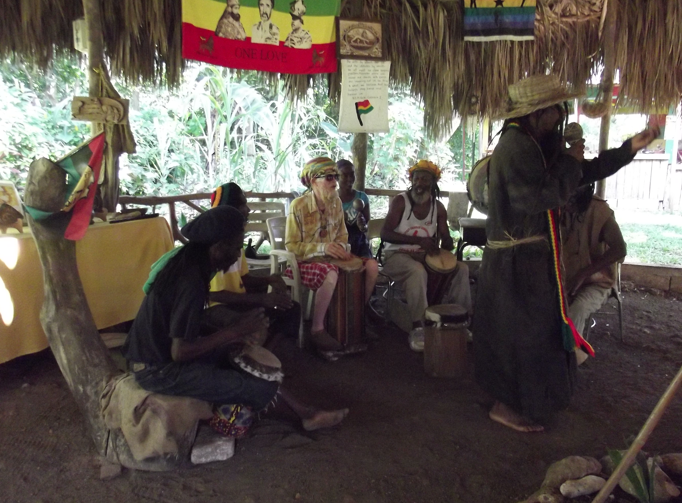
Drummers at the Rastafari Indigenous Village, St. James
Rastafari Drummers

Rastafari Indigenous Village – If you’re interested in learning about the Rastafarians, how they live, what they eat, their philosophy, head to the Rastafari Indigenous Village, a small community of Rasta bretheren, and some sistren too, who’ll give you the 411 on Rastafari beliefs, show you some drum moves and give you a tour of their village. An ital (purely vegetarian) lunch is also offered.

Bonus Option:

Rafting on the Great River – Nothing relaxes more than river rafting. This one-hour excursion down the Great River includes buffet lunch and drinks.

I’m sharing this post with Wanderlust Wednesday, which Dana at Time Travel Plans organizes.

Foodie Tuesday: Codfish Fritters (Stamp and Go)

I love codfish fritters – tasty bite-size morsels of cooked codfish enveloped in light flour – but made them for the first time only last year. Cod or salt fish fritters are very popular as appetizers or snacks and are made by adding flaked codfish to a batter, which is then deep-fried.

Codfish Fritter batter
Batter

Also called Stamp and Go, apparently after the command (“Stamp and go!”) that was given to 17th century British sailors when tasks had to be done in a hurry, codfish fritters are sometimes referred to as Jamaica’s first fast food. They are relatively easy to make, so I’m not sure why it took me so long to make them. Codfish fritters can be eaten by themselves or accompanied by a dipping sauce.

Codfish Fritters
Fritters

How to Make Codfish Fritters

Ingredients

  • 1 cup salted codfish (deboned) 
  • 2 cups unbleached All Purpose Flour
  • 2 onions, finely chopped
  • 2 tomatoes, finely chopped, seeds removed
  • 2 cloves garlic, minced
  • 2 stalks escallion, finely sliced
  • 2 tsp. black pepper
  • 1/2 Scotch bonnet pepper, finely chopped (optional)
  • 2 tbsp. vegetable oil, plus more for frying
  • 2 tsp. baking powder
  • 1 1/2 cups water, at room temperature

Instructions

  1. Soak codfish overnight in water, or bring to a boil twice (for 12-15 minutes), draining and adding fresh water after each boil.
  2. Drain and rinse the codfish under running cold water.
  3. Using a fork or your fingers, flake the codfish into small pieces, taking care to remove any remaining bones.
  4. To a small skillet, add oil and allow to get hot. Add onion, garlic, tomatoes and escallions. Sautee until soft about 5 minutes. Add black pepper then combine. Remove from heat and allow to cool
  5. Add codfish to the seasonings. Stir to combine.
  6. In a medium bowl, add flour and baking powder. Stir to incorporate.
  7. Add codfish mixture to the flour and stir to combine.
  8. Add water gradually, mixing by hand until a firm but loose batter is achieved
  9. Pour oil into a 6-qt. Dutch oven to a depth of 2, and heat over medium-high heat until a deep-fry thermometer reads 350°. Using a tablespoon, drop rounds of dough into oil, and fry until golden brown, about 3 minutes; repeat until remaining dough is finished.
  10. Using a slotted spoon, transfer fritters to paper towels to drain briefly.
  11. Garnish with tomato or lime wedges, chopped scallion, etc., and serve.

Recipe adapted from Enid Donaldson’s The Real Taste of Jamaica.

Although I’ve only used codfish, I’m sure other meats can be substituted. Fritters are not only about meat. Bananas that are very ripe can also be used, though the recipe is slightly different.


Have a foodie post you’d like to share? Join the #FoodieTuesday linkup and add it here  –

  • Add the link to your foodie post in the link tool below.
  • As a courtesy, please include a link back to this post.
  • Leave a comment and do the same for the other posts.
  • If you Tweet, G+, Facebook use the hashtag #FoodieTuesday.


[inlinkz_linkup id=307989 mode=1 pageSize=300]

Jamaica Board Signs, I

Signs like this one make me smile. Specifically, it’s the part that states, it is my intention to apply. As long as you intend to apply, you’re golden.

Signs
Liquor license sign

Like most places, business establishments in Jamaica that sell spirits must have a license. However, they can begin operating without one if they post a sign like the one above.

There are clear requirements for the sign: it must be in capital letters not below 5mm in height, and displayed prominently.

The business owner must apply for a license and submit the application form ‘21 clear days’ prior to the sitting of the Licensing Authority, but I’ve seen signs like these displayed on businesses for months or even years. I’ve often wondered if the owners just never bothered to take them down after they receive the license or if they ever bother to submit an application. After all, if the authorities ask, you can just say, I intend to apply.

Applying doesn’t mean the license will be issued automatically. Members of the community can object, but it has to be in in writing.

This is my submission to Travel Photo Thursday, which is organized by Nancie at Budget Travelers Sandbox. Be sure to head over and check out more photos from locations around the world.

The Institute of Jamaica – Rastafari: Unconquerable!

On July 21st, the Institute of Jamaica opened an historic exhibition entitled, Rastafari: Unconquerable! It is the first exhibition in Jamaica on the Rastas and as soon as I heard about it, I knew I had to see it.

Rastafari exhibition in Jamaica
Entrance to the exhibition

During the ride to the museum, I thought several times of One Love: Discovering Rastafari, the first exhibition on the Rastas that I had seen at the Smithsonian’s Museum of Natural History in Washington, DC. I was excited to see that Rastafari, the small movement that began in Jamaica in the late 1930s and has since spread worldwide, was finally getting consideration and scholarship. Discovering Rastafari, which ran from November 2007 to November 2011, left me wondering if that was all there was. I hoped the current show would be the definitive study on Rasta.

Rastafari exhibition, Jamaica
Rastafari: Unconquerable!
Rasta exhibition, Institute of Jamaica
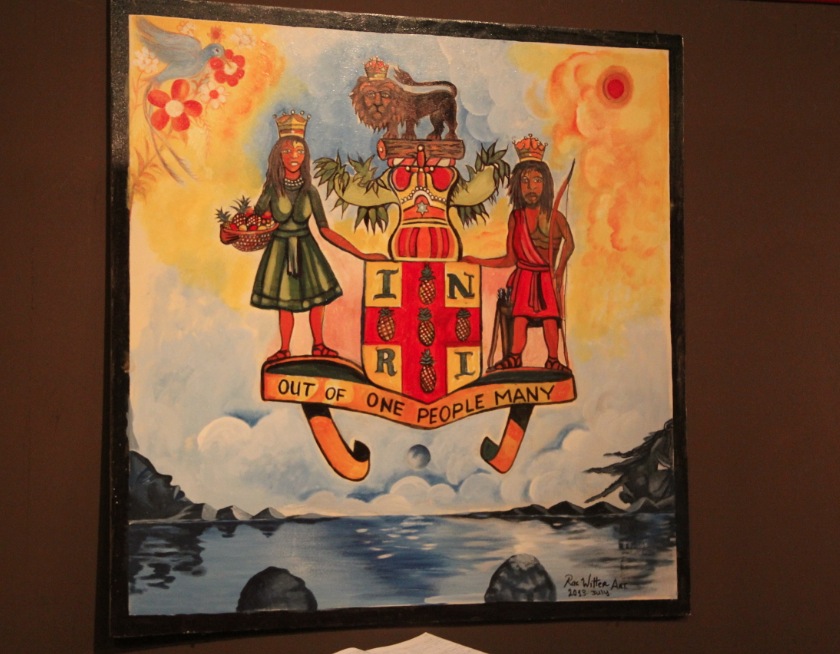
Artwork from Rastafari: Unconquerable!

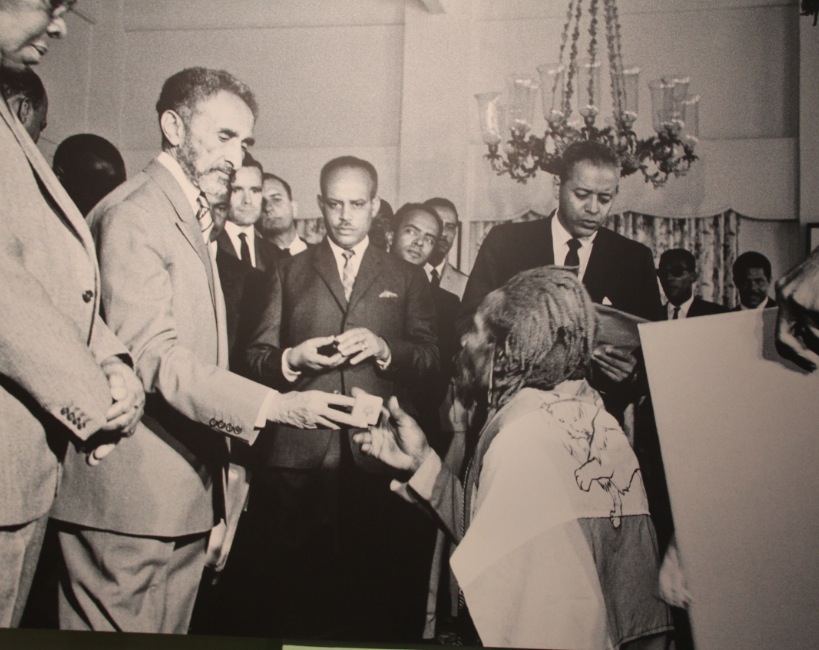
Undoubtedly larger in space and scope, Rastafari: Unconquerable tells the story of the birth and evolution of Rasta through videos, installations, artefacts and personal stories. It covers several watershed moments in the history of the movement in segments organized around themes such as Revelation of Rastafari, its Philosophy and Evolution, and the 1966 visit to Jamaica of His Imperial Majesty Haile Selassie I. It also features a review of the attempts at suppression of the movement by Jamaican authorities, by far one of the most appalling periods in our history.

Rastafari Exhibition, Marcus Garvey
Marcus Garvey
Rastafari Visionaries
Visionaries
Rastafari Exhibition
Haile Selassie in Jamaica, 1966

Rastafari has come a long way since Lionel Howell, the first Rasta, founded Pinnacle, the home he established for his followers, and Marcus Garvey advised the poor and downtrodden to look to Africa for the crowning of a black king who would deliver them out of poverty.  It’s exciting to see the museum finally undertaking this important step in recognizing Rasta’s influence on the society, and their presence in the world.

Rastafari exhibition
Haile Selassie

One thing that struck me about the exhibition was its stillness, its flatness. It was as if the breath, power, vitality and passion that pulses through Rastafari could not, as the title suggests, be conquered even in this exhibition that celebrates Rastafari; the Movement which grew out of struggle, with larger than life visionaries who fought against the system, could not be tamed. Still, it’s an excellent first exhibition, a must see.

Rastafari: Unconquerable remains on view at the Institute of Jamaica, 10-16 East Street, Kingston. 876-922-0620, Admission $5


FoodieTuesday: Passion Fruit Drink

The passion fruit is a round yellow (or purple) fruit with a very distinctive flavor. It is used in juices, ice cream, pastries and even syrup.

The yellow passion fruit is quite common in Jamaica and is usually found growing on vines in backyard gardens.


Whole passion fruit
Fruit

I was at my uncle’s home a few years ago when he asked if I’d like something to eat. I figured he’d buy us a meal so I was surprised when I heard the unmistakable sounds of pots and pans coming from his kitchen.

“You said you wanted something to eat,” he said, when I asked what he was doing, “I’m making us lunch.”

He noticed the look of shock on my face and burst out laughing.

“You think I can’t cook,” he said, still smiling.

When I offered to help, he shooed me out of the kitchen.

“I’ve been cooking since before you were born,” he added, chuckling.

Half of a passionfruit
Fruit

That did nothing to boost my confidence. I never knew Uncle Norris, the baby of the family, to cook. Whenever he came to our house, he’d head straight to the refrigerator for something to drink. If we didn’t have lemonade, his favorite, he’d call me to make him some. I was maybe 8 or 9 and hated having my playtime interrupted.

By now the smell of curry was wafting through the living room.

“What are you making?” I called out.

“Mind your own business,” he replied. “I said I’d make you lunch and I’m making you lunch.”

When I heard the whirring of the blender, I became even more curious. What could he be making now, I wondered.

I couldn’t believe the meal he’d whipped up. It was the most delicious curried chicken I’d eaten in a while. But it was the passion fruit drink that accompanied it that still has me talking almost four years later.

The slightly tangy taste of the passion fruit was the perfect accompaniment to the bold flavor of the curried chicken. It was so refreshing, I poured another glass.

How to Make Passion Fruit Drink

Ingredients

4-6 Passion fruits

Water

Sugar to taste

Directions

Cut passion fruit in half, scoop the flesh into a blender. Add water and sugar to taste. Blend until smooth. Strain. Serve chilled or over ice.

Have a foodie post you’d like to share? Join the #FoodieTuesday linkup and add it here  –

  • Add the link to your foodie post in the link tool below
  • As a courtesy, please include a link back to this post.
  • Leave a comment.
  • If you Tweet, G+, Facebook use the hashtag #FoodieTuesday

[inlinkz_linkup id=305662 mode=1 pageSize=300]


The Smelly Starfish Flower

I saw the starfish flower for the first time a few years ago in St. Elizabeth, Jamaica. I didn’t know its name and everyone I showed the photo to, shook their heads. They didn’t know either. All I knew for sure was that the stems made me think it had to be from the cactus family. I also knew that I was intrigued by the shape and squiggly lines.

Open Carrion Plant
Carrion Plant

A few weeks ago, I was visiting a friend. As we sipped lemonade and chatted on her verandah, she stopped mid sentence, “Smell that?” she asked, furrowing her brow.

“No. What?”

“There, don’t you see it?”

I looked in the direction she’d pointed, the place she insisted the odor was coming from. But all I saw was lush, green foliage. Nothing seemed out of place or able to produce the foul smell she alluded to. I didn’t see or smell anything offensive and told her so. But it didn’t seem to reassure her.

“Don’t you see that yellow flower, the one that looks like a large star?”

By now I could hear tension creeping into her voice. I felt at any moment, she’d spring from her seat to seek out the odor that was preventing her from enjoying her lemonade.

Later, as I was leaving, as if to vindicate herself, she pointed out the plant. Even though I was now closer, I still couldn’t smell it but I recognized it as the same one I had admired and had been unable to identify years earlier. When I asked, she said it was the starfish flower.

The starfish is a variety of carrion flower. These flowers produce a putrid odor, probably from the insects that pollinate them, that some say is similar to rotting flesh.  I’m not sure why I didn’t smell it. I also wondered why my friend had it in her garden if she didn’t like the smell. Maybe, I though as I walked through her gate, its beauty makes up for its smell – sometimes.


This post is linked to Travel Photo Discovery’s Travel Photo Mondays. Be sure to head over and check out other photos from around the world.

The Rhumba Box

While waiting in the immigration line at the Donald Sangster International Airport in Montego Bay a few years ago, I heard the unmistakable sound of a mento band. They were playing a familiar tune, Take Her to Jamaica, and as I waited, I tapped my feet lightly and hummed along.

The singing got louder as I exited immigration on my way to pick up my luggage from the carousel. By now, I could see the musicians – three or four of them. One was playing a rhumba box, a percussion instrument that I hadn’t seen in years.

Rhumba box, Jamaica
Rhumba box

The rhumba box is a two foot square wooden box. It has a hole in the center to which is attached five metal strips that are tuned to different pitches. At that size, it’s also a seat for the musician and allows him to reach the metal keys.

The rhumba box originated from the African mbira, or thumb piano. It made its way to Cuba, where it’s called the marímbola, then to other countries. In Jamaica, it’s synonymous with mento, the folk music that is a precursor to ska and reggae.

Sitting on the rhumba box, he strummed the metal strips to hold the rhythm for the guitar and the maracas players as they belted out the words to another song, This Long Time Gal.

I watched many stoic faces relax and smile as they heard the music. I was still humming to myself as I walked out of the airport.

Click here to listen to the sound of the rhumba box and here to hear a mento version of Amy Winehouse’s Rehab by the Jolly Boys.


I’m linking this post to the weekly photo linkup, Travel Photo Thursday, at Budget Travelers Sandbox. Be sure to head over and check out other photos from locations around the world. Enjoy!


5 Reasons to Visit St. Thomas, Jamaica

I never made it to St. Thomas, located on Jamaica’s southeastern coast, until I was in high school. As part of our graduation celebration, our teacher organized a day trip around the island that brought us not to Morant Bay, its historic capital, but to Prospect Pen to view the Jamintel Earth Station* that had opened some years earlier. I still have the grainy photo of us posing primly in our navy school uniforms with part of the satellite station in the background.

St. Thomas, the 9th largest parish on the island, is bordered on its northern end by the Blue Mountains. Its diverse landscape includes mountains and wetland areas. The island’s only east-west river, the Plantation Garden, is located in the parish.

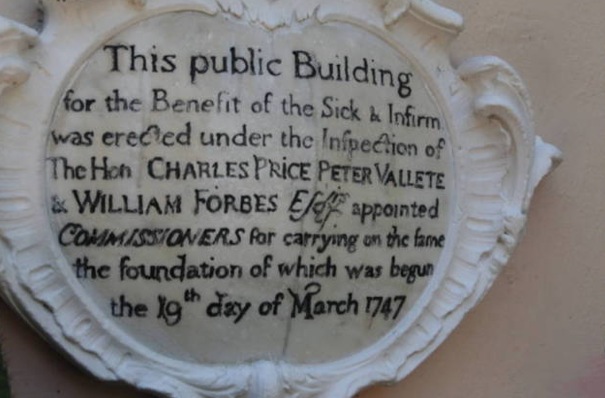
Bath Fountain plaque, St. Thomas Jamaica
Plaque at Bath Fountain

St. Thomas was established in 1662 and named for Thomas, Lord Windsor, who was governor of Jamaica at that time. It was known then as St. Thomas in the East. The name it was shortened to St. Thomas around 1866 when the number of parishes was reduced from 22 to 14.

St. Thomas has been home to the indigenous Taino Indians, Spanish, British and Maroon communities. Archeologists have found remnants of Taino settlements, dating to 650AD, in several locations in the parish.

Continue reading “5 Reasons to Visit St. Thomas, Jamaica”

Jamaica @51: Rice and Peas or the Jamaican Coat of Arms

Welcome to another #FoodieTuesday!

You can join the #FoodieTuesday linkup by –

  • Adding the link to your foodie post in the link tool at the bottom of this post
  • Leaving a comment.
  • As a courtesy, please include a link back to this post.
  • Tweeting, G-plusing, Facebooking using the hashtag #FoodieTuesday


Today, Jamaica celebrates her 51st year of Independence. There have been many changes in the country since 1962, notably in the way we eat.

Take rice and peas, for example. (Rice and peas is affectionately referred to as the Jamaica Coat of Arms, though I haven’t been able to find out why.) When I was growing up in rural Jamaica, we had rice and peas only on Sundays and on special occasions, like Christmas or Easter. Now, there’s rice and peas on almost every restaurant menu every day of the week.

The Easter bun and cheese that we had only at Easter is just as commonplace.

Rice and Peas with vegetables
Sunday meal – rice and peas with vegetables and meat

Back then the patty, a meat-filled turnover, was our main fast food and a popular lunch item for school children. With international chains like KFC, Burger King and Domino’s, along with the homegrown chains, Island Grill, Tastee, and Juici Patties in almost all fourteen parishes, we have a variety of fast food restaurants to choose from now.

Sundays still are special. For most of us, it’s the day we pause, bring family around the dining table to share the meal.

But it’s not always rice and peas. I’m no longer wedded to the Jamaican Coat of Arms on Sundays because I don’t want to spend a lot of time in the kitchen. But I wouldn’t plan a Christmas or Easter dinner without it on the menu.


How has your eating habits changed in the last twenty years?


How to Make Rice and Peas

Ingredients

3 cups of rice
2 cups of fresh red kidney beans (or Pigeon peas or a can of kidney beans)
5 cloves of garlic
1 can of coconut milk
1 whole Scotch bonnet pepper
3 scallion (spring onions)
3 sprigs of fresh (or 2 teaspoons of dried) thyme
1 teaspoon of salt
1 teaspoon of black pepper


Preparation

Wash and soak peas overnight or put to boil in a medium saucepan with enough cold water to cover. Add garlic and a little salt to taste.
When peas are soft, add coconut milk and seasonings – thyme, Scotch bonnet, 2 sprigs of scallions, black pepper, and remaining salt, if needed.
Let cook for a few minutes then add the rice.
Cover and cook until the rice is tender and there’s no more liquid.
Plate and garnish with remaining scallion. Serve with your choice of meat or alone.

[inlinkz_linkup id=303566]