New York’s Museum of Art and Design

NYC - Museum of Arts & Design
Image by wallyg via Flickr

New York City’s reputation as the destination for the visual arts is legendary. With major museums, art galleries and exhibition spaces, I could spend every Sunday visiting each one and not see everything on display. So I have to be strategic.

Last weekend, I decided to visit the Museum of Art and Design (MAD) in its new home at Columbus Circle. The brainchild of Aileen Osborn Webb, it was opened in 1956 as the Museum of Contemporary Crafts, with its stated mission to celebrate the work of American craftspeople. The museum was renamed the American Craft Museum in 1979 and finally the Museum of Art and Design in 2002 to reflect its focus on the broader interplay between craft, design, art, architecture, interior design, technology and the performing arts.

My goal last Sunday was to catch the final day of an exhibition called the Global Africa Project, a sweeping look at contemporary African art, design and craft worldwide. Pieces were drawn from the works of over 100 artists working in interior design, fashion, sculpture, photography, paintings, furniture, jewelry, ceramics and textile from Africa, Asia, Europe, the United States and the Caribbean.

I wished I hadn’t waited until the last day as I felt rushed to take it all in but I’m glad I didn’t miss it. It was a great opportunity for me to learn about these artists, the majority of whom I hadn’t heard of before.

My next stop was to view the collection of tapestries documenting the collaboration of the feminist artist and educator, Judy Chicago and weaver Audrey Cowan and her husband, Bob. This is an impressive collection of work designed by Ms. Chicago and interpreted by Ms. Cowan.

The museum has an extensive collection of jewelry, the majority of which is housed in drawers which visitors are encouraged to check out. Most people, however, seem to miss the the sign.

Visit the Open Studios on the 6th floor to watch artists working in jewelry, ceramics, sculpture. Stop by the restaurant for lunch or visit the museum store on the main floor for gifts.

Museums tend to be overwhelming for me so I tend to select one exhibition and soak it all in. Though MAD is smaller than say, the Metropolitan, it’s possible to view all the exhibitions in a day.

One feature that I like is the ability of visitors to the museum’s website to view its collections and curate their own show, like I did here.

The Museum of Art and Design is located at 2 Columbus Circle. Open Tuesdays – Sundays from 11:00 – 6:00 p.m., Thursdays 11:00 a.m. – 9:00 p.m., closed on Mondays and major holidays. Entrance is free to members, high school students with ID and children under 12. General admission $15/$12 for seniors/students. On Thursdays from 6:00-9:00 p.m., you can pay as you wish.

A Partial List of Museums in New York

So for your next visit to New York City, make sure to add at least one museum to your list of things to do. Pack comfortable shoes and enjoy!

If you like what you’ve read why not Share, Tweet, Digg, Like, etc. You never know who might be interested.

Sunday in Central Park

One of the nicest things about living in New York City is Central Park. At more than 800 acres, it is an oasis of green in a sea of concrete and brick.

Running from 59th Street to 110 Street, Central Park receives approximately thirty-five million visitors annually.

It is a popular venue for skating, concerts and theatre, boating, birding, rock climbing, running, walking, bicycling, etc., and is central to the enjoyment of life in the city.

Central Park near 72nd Street
Catch and release at the Turtle Pond

Fishing is not allowed in the park but people still throw out their lines. Whatever they catch has to be returned.

King Jagiello

There are nearly 29 sculptures in Central Park. This one commemorates King Jagiello of Poland and Grand Duke of Lithuania.

Belvedere Castle

Belvedere Castle offers spectacular views of the park and surroundings from its observation deck. There’s no charge to enter but visitors can leave a donation in boxes on the main level.

Belvedere Castle
Great Lawn from Belvedere Castle

If you like what you’ve read, why not Share, Tweet, Digg, Like, etc. You never know who might be interested.

Weekly Photo Challenge: Tiny

When I saw the topic for this week’s Photo Challenge, I felt sure I wouldn’t be able to find anything but I decided to look anyway.

While I looked, I thought about the various meanings of tiny, what the word implies. A thing is tiny in relation to something else. This group of kayakers, for example, looks tiny from my vantage point on the bridge and compared to the dinghy and the other boats on the river.

Kayakers on the Thames

Tiny can also be a name. When I was little, I had a friend whose aunt was called Tiny. I was mystified as to why she was so named but was too young to ask — it would have been considered impolite. Based on our relative ages, I should have been the tiny one! But like everyone else, I ended up calling her Miss Tiny.

I’m always amused when I hear of a very large person — I’ve only seen this in the movies — who’s nicknamed Tiny.

Line at the Eiffel Tower

People waiting on line to buy tickets to go up to the top of the Eiffel Tower look like tiny specks of color when viewed from above — from the second level, I think.

So these are my interpretation of tiny.

Enjoy!

Before My Travel Blog

Long before I had a travel blog, I kept  journals. I have been doing that since high school. Looking back, I remember the person I was when I worried about passing an exam, gushed about a boy or a grumbled because of some new disagreement with my mother. (Yes, those teenage years, when I was trying to assert my independence, were tumultuous.)

A few of my journals (old and new) - Maynefoto

Sometimes, I was diligent and filled page after page with the most minute details of my life. At other times, days would pass before I felt like reducing my thoughts to words on a page. But I never stopped writing.

When I started traveling, it was natural that I wanted to make notes of my trips. I knew of no better way to do this than a travel journal. Sure, photos are great but they only capture moments in time. Each journal entry covers a day and fills in the moments between the photos.

My travel journals have ticket stubs, receipts, menus, post cards, anything that adds texture to my trip. When I visit a historic place, I take notes in my journal or draw. Now that I’m getting to know my camera better, I also make notes about the photos I take, the settings I use, etc.

Page from my latest travel journal - Maynefoto

The difference between a travel journal and a blog is that the journal is private. I write freely because the information is for my eyes only. While I use my journal as a source for my blog, because my blog is public, I am careful about what I share. I still believe some thoughts are well, private, and should remain that way.

Although I blog about my travel experiences and enjoy sharing them, I can’t abandon my journal. I love the way I have to slow down to translate my ideas to words and how carefully, or not, I choose those words. And when words fail, I supplement them with drawings or pictures.

Because I use a computer all the time, except when I have to sign my name, I love to see my handwriting and see how it changes throughout my journal, depending on my mood.

The journals I use must have pockets so that I can store stuff. I prefer ones that lay flat when I open them, have good quality paper and a sturdy cover. Although I like ruled journals, most times, I go for ones with plain pages as the lines can feel confining. For travel, I also prefer one that’s small enough, say a 6″ x 4″, so that it can fit easily into my purse.

Do you use a journal when you travel? What things do you write about?

If you like what you’ve read why not Share, Tweet, Digg, Like, etc. You never know who might be interested.

A Sunday Drive Through the English Countryside

When I was growing up, we’d go for long drives on Sunday afternoons. Each Sunday was a new adventure that most times involved ice cream. I still have fond memories of those times.

Though the scenery was different, our Sunday drive through the English countryside it took me back to that time.

Rapeseed field seen on a drive thru the countryside
Rapeseed

Instead of the fields of sugar cane that I would have seen in the part of Jamaica I lived, I saw fields of rapeseed. At first, I thought rapeseed were flowers. They’re not, though.

Rapeseed field seen on a Sunday drive
Rapeseed field

Rapeseed is used to make vegetable oil and in 2000, according to Wikipedia, it was the third largest source of vegetable oil in the world.

It’s hard to ignore field after field of yellow rapeseed. They capture the imagination even from a distance.

Rapeseed field on a Sunday drive
Rapeseed field

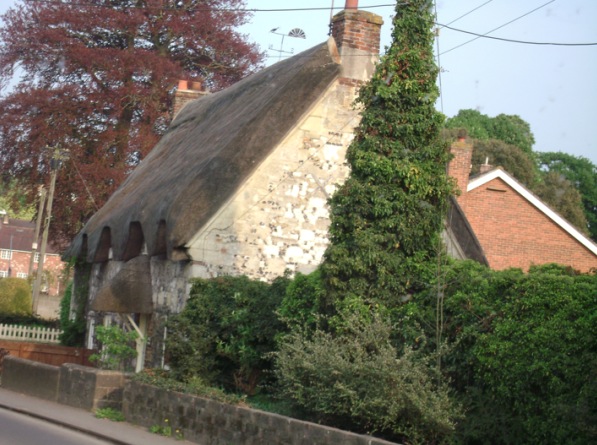
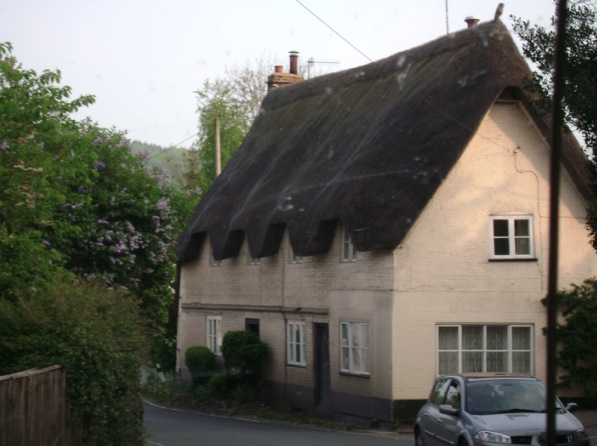
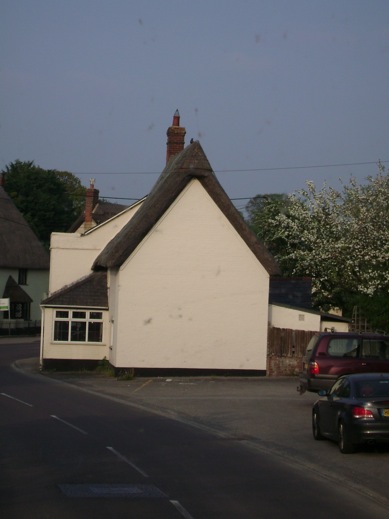
I felt in love with thatched houses when I saw them in Southern Africa and was surprised to see them in England. Apparently, there are more thatched cottages in the UK than the rest of of Europe. I wished I could have taken a photo of each one. I tried.

Thatched cottage seen on a Sunday drive
Thatched cottage
Thatched cottage seen on a Sunday drive
Thatched cottage
Thatched cottage seen on a Sunday drive
Thatched cottage, side view

You know you’re in the country when you see pig sties.

Pig sties seen on a Sunday drive
Pig sties like none I’d ever seen

It was difficult, at first, to imagine what these semi-circles that seemed as if they were planted in the ground were for. But as we got closer, I noticed a few pigs. These aren’t any pig sties I’m used to seeing.

It’s anyone’s guess what’s planted in that field in the back.

All too soon, the drive came to an end. But it left me quite refreshed and energized and gave me new Sunday afternoon drive memories.

How do you like to spend your Sunday afternoons?

If you like what you’ve read, why not Share, Tweet, Digg, Like, etc. You never know who might be interested.

Stonehenge – Sacred Stone Circle

I don’t remember when I first learned about Stonehenge but from the beginning, I’ve wanted to see it. As soon as I knew I would be going to London, I started searching for a tour. I opted for a private tour that would take me inside the stone circle at sunset. (There are also sunrise tours and other tours that don’t go inside the circle.)

Once I booked, it was hard to contain my excitement.

After a scenic drive through some of England’s most picturesque villages and towns, we arrived at Stonehenge around 6 p.m., just as the sun began its descent over the horizon.

I was struck by the size of the monuments. They looked smaller than what I had imagined they would have been after seeing them so many times on television. But they were no less impressive.

Since our group of 52 was too large, we separated into two – the first group entering the circle shortly after we arrived, the second about 45 minutes later.

Stonehenge is believed to have been built as a burial site around 2500 BC. Since there’s no written record of how it was constructed, speculation and theories abound.

However it was built and whatever the reason, it is still an incredibly impressive site, despite several missing and / or damaged stones.

The site feels peaceful, the surrounding area lush and green with fields of canola (rapeseed) in the distance.

When I see places like Stonehenge, I can’t help wondering what will be left of the structures we’ve built and what future generations will think of us.

What do you think?

The Heelstone
Yellow field of canola
Stone circle at Stonehenge
Artist’s rendition of what Stonehenge looked like

If you like what you’ve read, why not Share, Tweet, Digg, Like, etc. You never know who might be interested.

Are Airline Seat Sizes Shrinking?

SAA row 15
Image by mralan via Flickr

Like most travelers, whenever I plan a trip, the first thing I think about is the cost of the ticket. Depending on how long my flight will be, I also think about snacks I’ll take.

The size of the airline seat never crosses my mind.

I consider myself average in weight and size – 5’6″ and approximately 165 pounds. Yet, lately, I’ve noticed that even on international flights, I just fit the size of the seat.

Now, I might have gained a few pounds in the last year but not enough so I just barely fit.

So if it’s not my size, I can only conclude it’s the seat. And I have to wonder: Are airline seat sizes shrinking?

On my last flight, on Virgin Atlantic, I had to get out of my seat in order to reach the remote control that was housed in the armrest.

And once I pulled out my tray, it was practically in my stomach. When the person in the seat in front of me decided to recline his seat, I had to do the same as there was hardly room left for me to manoeuver.

Needless to say, it was one of my most uncomfortable flights in recent memory. I felt better standing or walking the aisle. But even that’s problematic – the aisles seem to be getting narrower and narrower and except for space near the washrooms, there’s no place to stand. I was stuck in my uncomfortable seat.

If I have a problem, what about someone larger? Or taller?

According to what I’ve read on Wikipedia, economy class airline seats are about 17″-18″ (43-46 cm) armrest to armrest. That’s just enough room for a small person or a child.

As for legroom or seat pitch, in most economy class seats it’s between 30″-32″ (76-81 cm). I’m not a very tall person but my knees were pretty close to the seat in front of me. (Of course, I could have upgraded to an aisle seat. For an additional fee, of course.)

I think the airlines have deliberately made seats smaller so they can carry more passengers and make more money.

Unfortunately, for the moment, there little we can do that won’t cost extra. Before you fly next time, think about your seat and check your airline’s seat plan on Seat Guru‘s list of more than 700 airlines.

Happy travels!

Weekly Photo Challenge: Wildlife

I took these photos last year in Zimbabwe’s Hwange National Park. The experience of watching wildlife in their natural habitat was life changing.

I knew that animals are intelligent, compassionate and caring but watching them interacting with each other or with other species and taking care of their young was heartwarming.

Zebras and Impalas

Zebras are incredibly beautiful up close. And almost every time we saw them, impalas were not far away.

Giraffe

Despite their height, giraffes are stately and gentle animals.

Lioness at rest

We watched this lioness for about 20 minutes. She was so full after a kill the previous night, she hardly moved.

Buffalo and elephant

As we watched this herd of buffalo — there could easily have been 100 of them — we noticed several herds of elephants approaching. Despite their size — they’re the largest land animals in the world — they’re incredibly quiet. You hardly ever hear them coming!

Elephant

We were watching a baby elephant on one side of the road and didn’t see her mother standing a few feet away. I was so shocked, I’m glad I didn’t scream or fumble the camera.

Enjoy!

If you like what you’ve read, why not Share, Tweet, Digg, Like, etc. You never know who might be interested.

Eye Over London

My sister kept saying that she’d wait for me to arrive so we could take our 84 year old aunt on the London Eye. But by the time I got to London, our aunt was beginning to have difficulty getting around.

Maybe it was a good thing as it took more than 45 minutes from the time I picked up my ticket to the time I climbed aboard the ‘pod.’

But it was worth it. This is what I saw:

Passenger pods

One of the 32 oval pods that take passengers high above London.

Houses of Parliament seen from the London Eye
Hungerford Bridge
Waterloo bridge
House of Parliament with Big Ben
Haven't been able to identify this building
County Hall
South Bank view

I think our aunt would have loved this.

The ride on the London Eye was smooth, the view breathtaking. Just before each pod returned to home base, it discharged passengers and took on new ones. Each ride took about 30 minutes.

Some facts about the London Eye:

  • Designed by husband wife team of David Marks and Julia Barfield
  • It was opened in March, 2000
  • Hosts 3.5 million visitors annually
  • At 443 feet (135 meters), it is the 4th tallest structure in London
  • It is the world’s largest cantilevered observation wheel

If you’re not afraid of heights, next time you’re in London, make sure you check out the London Eye.

Enjoy the view!


If you like what you’ve read why not Share, Tweet, Digg, Like, etc. You never know who might be interested.

Lacock, a Proper English Village

Established in 1232, the village of Lacock was given to the National Trust in 1944 by Matilda Talbot. It is best known as the location for the television series and movies, such as Pride and Prejudice, Emma and Harry Potter.

I can see why.

Lacock house
Detail
Roof detail

Houses are made of natural stone.

I didn’t notice until our tour guide, David, pointed out that there was no electricity in Lacock. No electricity, no electrical wires snaking through the air.

Lacock Garden
Lacock garden
Flowers
Lacock Church
Detail
Bicycle outside King Johns Hunting Lodge

When King John (1167-1216) hunted in the forest outside of Lacock, he stayed at his hunting lodge. The lodge is now a tea room, restaurant and bed and breakfast.

If you like what you’ve read why not Share, Tweet, Digg, Like, etc. You never know who might be interested.